A Tribute to John Quincy Owsley, the Surgeon Who Saw the Future of SMAS
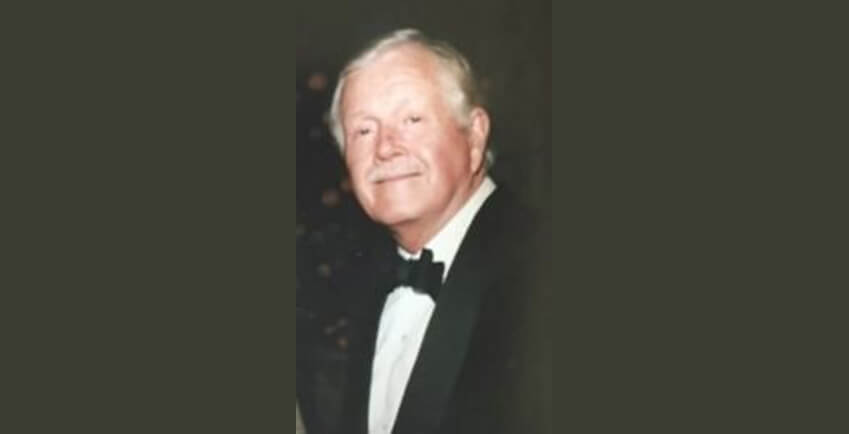
Tribute to Dr. John Quincy Owsley (1928 – 2014)
The visionary who brought SMAS to the world stage
With this article, I wish to pay a vibrant tribute to Dr. John Quincy Owsley . He was the first surgeon in the world to grasp the crucial importance and clinical potential of the Superficial Musculo-Aponeurotic System (SMAS) , which I described in 1976 with Martine Peyronie in the journal Plastic and Reconstructive Surgery .
A French heritage, an American intuition
This anatomical work was the result of a French team under the leadership of Professor Paul Tessier , the inventor of craniofacial surgery, at the Foch Hospital in Suresnes. At the end of my residency in Paris, I went to the United States in 1975 to further my training.
After stints with Professor John Marquis Converse in New York, and then with Ralph Millard in Miami—a genius in cleft lip and palate repair—I encountered a certain amount of skepticism. On the East Coast, my explanations of the SMAS and the revolution it represented for facial rejuvenation generated little interest. I felt a certain disappointment, as I sensed that our work would permanently transform our specialty.
The decisive meeting in San Francisco
It was in California, while I was training in microsurgery under Professor Harry Buncke at the Ralph K. Davies Medical Center , that fate brought John Quincy Owsley into my life. We struck up a long conversation in a corridor. Unlike his colleagues, he listened with rapt attention, nodding his head, immediately grasping the logic of our approach.
The official publication of our work in 1976 finally convinced him. Owsley then became the first in the world to trust this technique, mastering it with unparalleled dexterity and propagating it despite the initial reluctance of his colleagues.
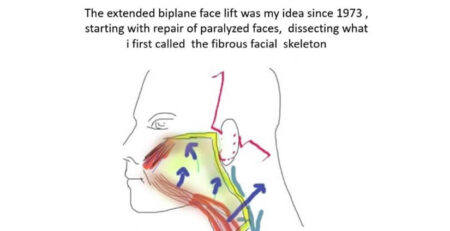
The Owsley Technique: The “Multi-vector SMAS-Platysma Facelift”
John Quincy Owsley transformed our anatomical discoveries into a three-dimensional surgical reality. His technique rests on four revolutionary pillars:
- Extended Dissection: He performed a wide release of the SMAS-platysma flap, allowing total mobility of the musculo-aponeurotic complex.
- Multiple Vectors: He understood that rejuvenation could not be linear. He combined a vertical vector (for the jowl) and an oblique vector (for the cheekbone).
- The Malar Fat Pad Suspension: He pioneered the repositioning of the malar fat pad, correcting the nasolabial fold naturally by fixing the flap very high on the temporal fascia.
- The absence of skin tension: By placing all the tension effort on the deep SMAS, it allowed for free skin redraping, avoiding the “windy” appearance and guaranteeing almost invisible scars.
This approach constituted the “missing link” to modern Deep Plane Facelift techniques, proving that dissection under the SMAS was safe and effective.
Portrait of a Master and an Ethical Conscience
Born in 1927 in Nashville to a family of military doctors, Owsley left his mark on plastic surgery through his rigor:
- Head of Department: At Ralph K. Davies Medical Center since 1980.
- Prolific author: More than 90 publications and a reference work, Aesthetic Facial Surgery (1994).
- Commitment: As Chairman of the Ethics Committee of the American Society of Plastic Surgeons (ASPS), he campaigned for an honest and scientific evaluation of results.
Major references
- 1977: Platysma-fascial rhytidectomy: A preliminary report . (PRS Journal). Initial clinical validation.
- 1995: Multiple vector face-lift: SMAS-platysma rotation flap plus midface malar fat pad suspension .
- 2002: The SMAS-Platysma Facelift: Advantages of a Multivector Technique .
Conclusion
It is regrettable that Owsley’s name is not more systematically mentioned today in discussions about the evolution of facial rejuvenation. John Quincy Owsley was not only an exceptional surgeon; he was a visionary who saw the future of his discipline in our anatomical charts of 1976.
If the SMAS is now the watchword for any successful facelift, it’s because a man in San Francisco had the audacity to listen to a new idea from Europe. It’s time that the history of surgery restored him to the prominent place he so brilliantly occupied.